How to Make Physical Education Fun in Homeschool

No sports required!
Physical education can be a challenging subject to homeschool, especially if your child doesn’t enjoy traditional sports.
Many PE programs focus on drills, competition, or team games. For some children this is exciting, but for others it can feel repetitive, stressful, or simply uninteresting.
Some children prefer movement that feels creative rather than competitive. Others enjoy experimenting with balance, speed, or coordination instead of practising the same skill again and again. And some simply want the freedom to move in ways that feel playful and self-directed.
When physical activity is framed differently, movement can become one of the most enjoyable parts of the homeschool day.
The good news is that homeschool PE doesn’t need to look like school sport. It can be flexible, creative, and built around curiosity, challenge, and experimentation.
Why Some Children Disengage from Traditional PE
Many physical education programs are designed around organised sports. While that works well for some learners, it doesn’t suit everyone.
Some children find team sports overwhelming or stressful.
For many learners, movement becomes much more engaging when it includes:
creativity and imagination
problem-solving and experimentation
freedom to adjust rules and try different approaches
activities that feel like challenges rather than exercises
When movement feels like something to explore rather than something to perform, many children become far more motivated to participate.
What Makes Movement Fun for Kids
Children often enjoy physical activity most when it feels playful and open-ended.
Activities that work well in homeschool settings often include:
Challenges: Can you balance longer? Jump further? Move across the space in a new way?
Experiments: What happens if you change the surface, the distance, or the rules of the activity?
Design and invention: Can you create a new game or obstacle course?
Variety: Switching between different types of movement keeps things interesting.
This approach helps children build coordination, balance, strength, and body awareness while also encouraging curiosity and creativity.
Simple Homeschool PE Ideas to Try
You don’t need specialised equipment or formal sports training to create meaningful physical activity at home.
Here are a few simple ideas to try:
Build an obstacle course: Use cushions, chairs, tape lines, or outdoor objects to create a movement path.
Create a balance challenge: Walk along a tape line, garden edging, or stepping stones in different ways.
Run movement experiments: Test how different surfaces affect jumping or running. Try grass, sand, or pavement.
Try timed movement missions: How many skips, hops, or jumps can you complete in 30 seconds?
Invent a new playground game: Encourage your child to design their own game and teach it to someone else.
Activities like these naturally support physical development while keeping movement playful and engaging.
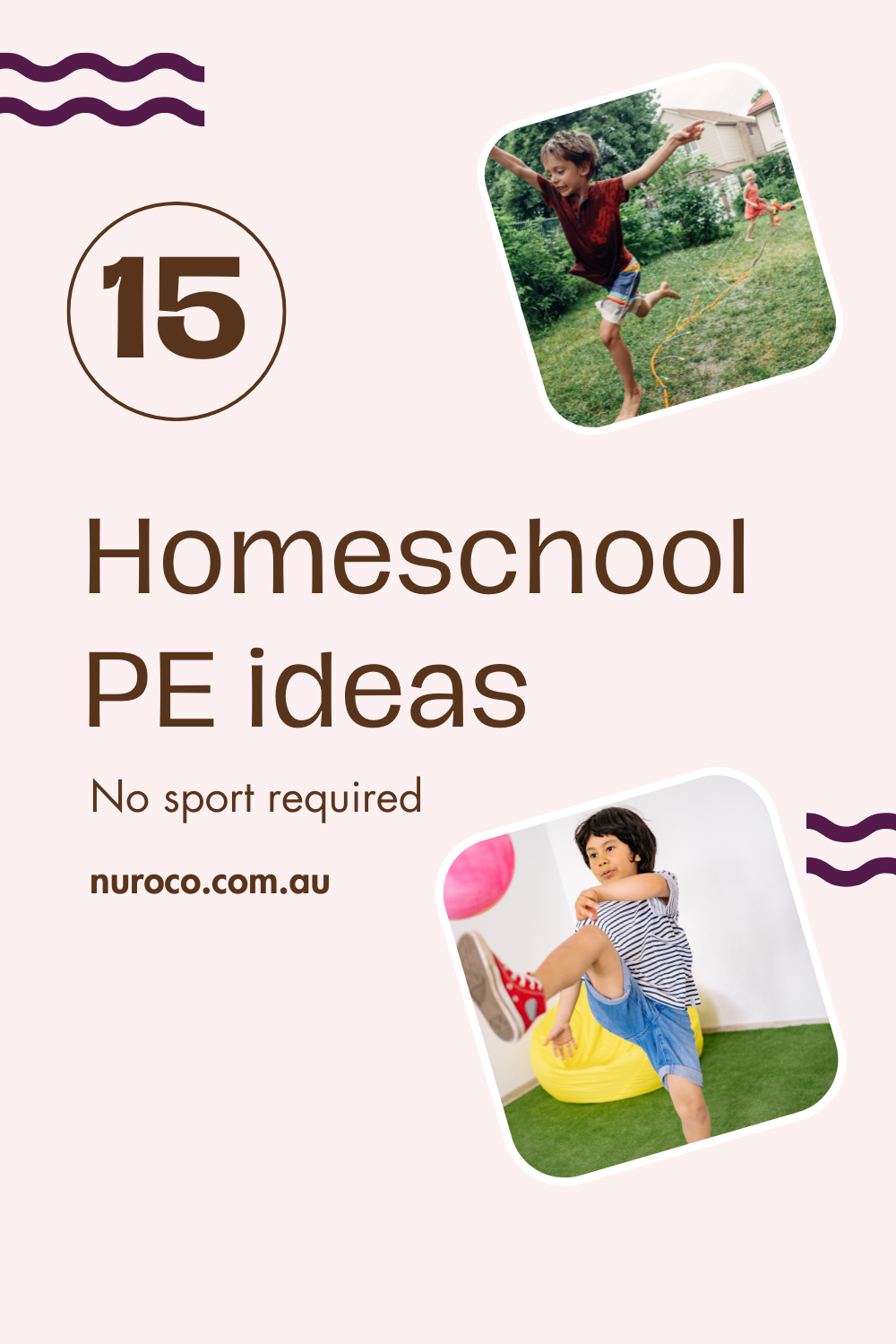
15 Fun Homeschool PE Ideas (No Sports Required)
If your child doesn’t enjoy traditional sports, these playful movement activities can be a great alternative.
Many of them can be done indoors or in small spaces, and most require little or no equipment.
Create a living room obstacle course using cushions, chairs, and tape lines
Walk a “balance path” made with masking tape on the floor
Set a 30-second jumping challenge and see if you can beat your record
Try moving across a room using only sideways steps
Design a new playground game and teach it to someone else
Build a jumping course and experiment with different distances
Create a “balance and freeze” game using music
Time how fast you can crawl under and over different objects
Set up stepping stones using paper plates or cushions
Create a movement scavenger hunt in the backyard
Try different ways of moving across the same space (hopping, crawling, skipping)
Build a mini “ninja challenge” course
Experiment with jumping from different surfaces (grass, sand, pavement)
Create a family movement challenge where everyone invents one activity
Design a new obstacle course and test whether other people can complete it
Activities like these help children build coordination, balance, strength, and spatial awareness, while keeping movement playful and engaging.
Turning Movement into a Creative Project
For some families, movement becomes even more exciting when children take the lead in designing activities themselves.
Instead of simply completing exercises, learners can:
design movement challenges
test different versions
adjust rules or layouts
observe what works best
This approach blends movement with creativity, problem-solving, and experimentation.
Some homeschool families enjoy exploring this idea through project-based learning.
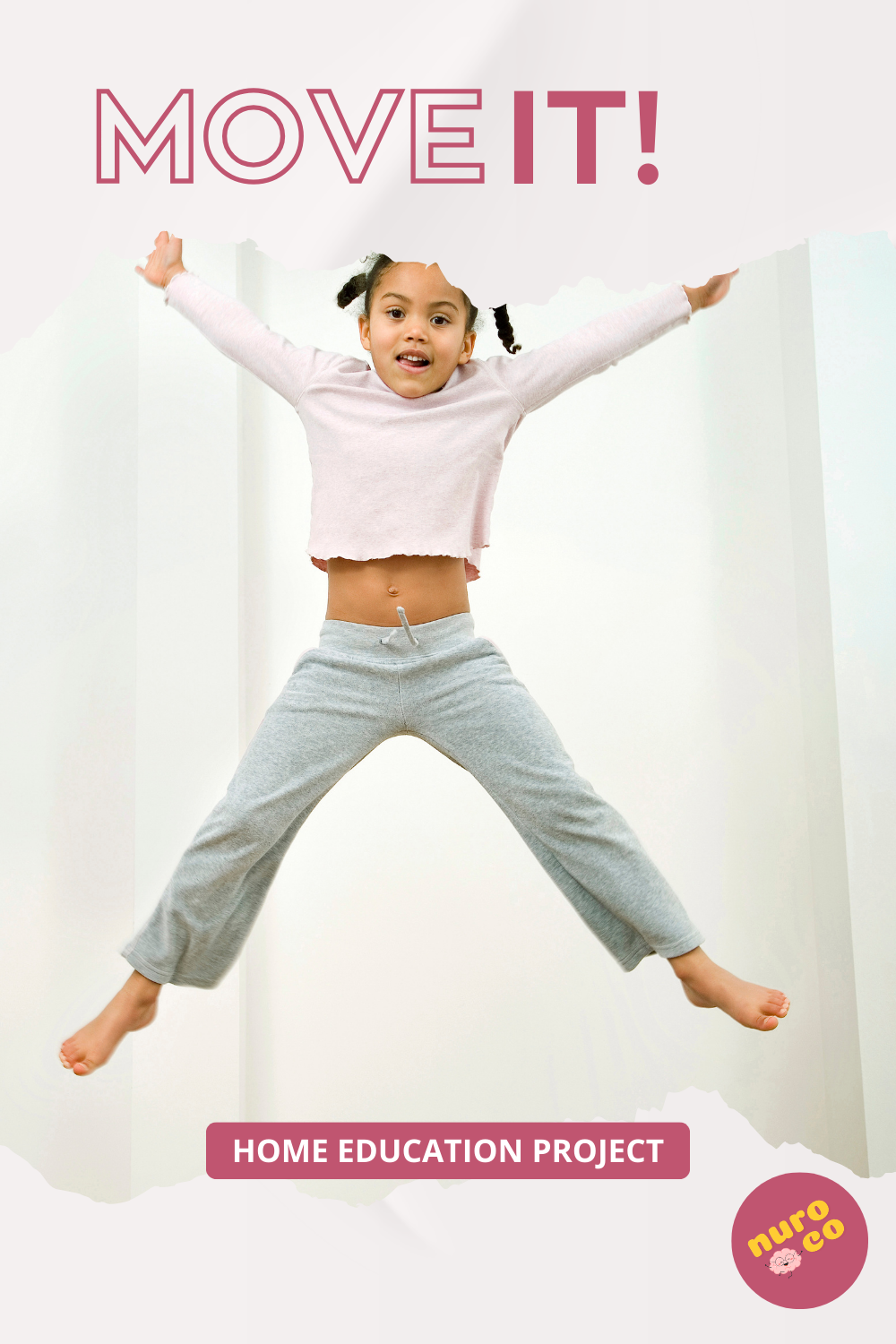
Move It!
Move It! is an eight-week homeschool project where learners design and test their own movement challenges. They experiment with balance, force, speed, and coordination while creating activities that are fun to play.
If your child enjoys building obstacle courses, inventing games, or experimenting with movement, you can learn more about the project here:
A Different Way to Think About Homeschool PE
Physical education doesn’t need to be built around drills or competitive sports to be meaningful.
Movement can happen through:
creative challenges
obstacle course design
outdoor exploration
game invention
playful experimentation
When children have the freedom to explore movement in ways that feel interesting and enjoyable, physical activity often becomes something they actively seek out.
And that’s when it becomes a natural and rewarding part of homeschool learning.