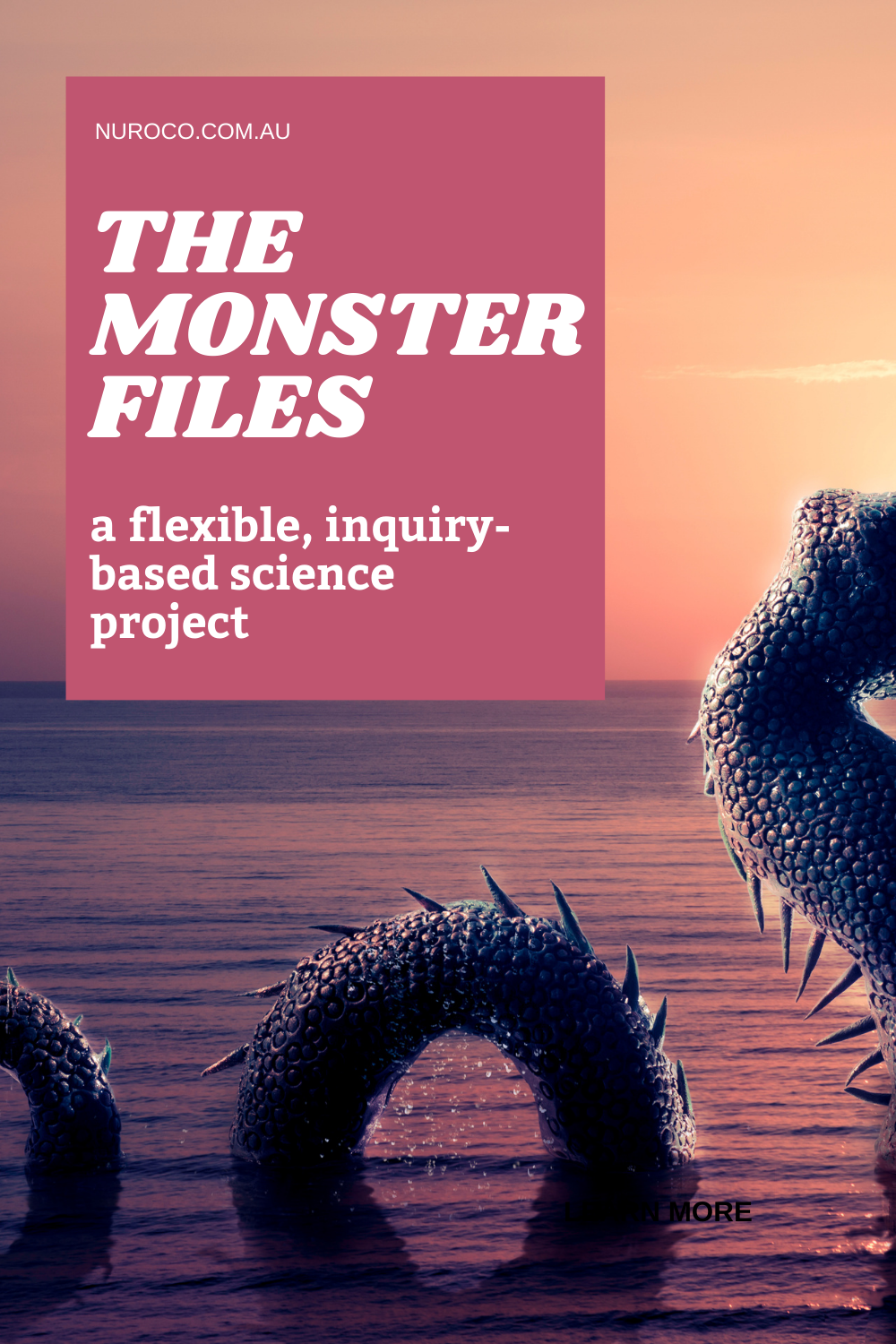
The Monster Files
If your learner loves imagining creatures, learning about animals, or noticing strange details about the world, The Monster Files offers a calm, curiosity-driven way to explore science without pressure to perform.
This free four-week homeschool mini project for Years 3–4 (Stage 2) invites learners to investigate an imagined living thing — a “monster” — and slowly figure out how its features, habitat, and survival needs might fit together.
There are no right answers, no worksheets, and no pressure to finish everything. Just curiosity, observation, and creative thinking.
What Is The Monster Files?
The Monster Files is a free homeschool science project where learners think like scientists by investigating a mysterious creature.
Instead of memorising facts, learners explore questions such as:
What kind of environment might this creature live in?
Why might it have certain features?
What would it need to survive?
How might its body help it in its habitat?
As ideas develop, learners build a Monster File - a loose collection of:
sketches
notes
photos
diagrams
conversations
models
Nothing needs to look finished or polished. Messy thinking is part of the process.
Why Start With an Imaginary Creature?
Using an imagined creature creates emotional safety.
When learners aren’t worried about being right, they are more willing to:
test ideas
compare evidence
revise their thinking
explore possibilities
This playful approach lets children engage with real biological ideas - habitats, features, environments, and survival needs - while staying curious and creative.
How the Project Works
The Monster Files unfolds across four gentle weeks.
Week 1: Monster Sightings
Learners record their first observations and impressions. What stands out? What seems unusual?
Week 2: Looking Closer
One feature is explored in more depth by comparing it with features found in real animals.
Week 3: Environments
Learners investigate possible habitats and environments, following clues from the creature’s features.
Week 4: What This Monster Needs
The focus shifts to survival needs - food, shelter, energy, and resources - and how these might be met.
Each week includes optional prompts and extension ideas, but nothing is compulsory.
Download the free Monster Files mini project
You can download the full four-week Monster Files mini project and get started today.
Designed for Neurodivergent Learners
Like all nuro co projects, The Monster Files is intentionally neuro-affirming.
Learners can:
draw, build, collage, talk, or work digitally
explore deeply or briefly depending on energy
change their minds as ideas evolve
work without time pressure or performance expectations
The parent guide also includes gentle suggestions for:
reducing cognitive load
supporting low-energy days
validating all forms of thinking and expression
If your learner feels done, they’re done.
Curriculum-Aligned (Without Being Rigid)
The Monster Files supports learning across:
Science
English
HASS (Geography)
Visual Arts
Technologies
The project is available in two curriculum versions:
NSW Curriculum (Stage 2)
Australian Curriculum (Years 3–4)
Both versions include a reporting pack explaining how learning can be documented through everyday evidence such as:
sketches
notes
models
photos
conversations
This makes homeschool documentation simple if registration requires it.
A Gentle Introduction to nuro co Projects
The Monster Files is designed as a low-pressure introduction to the way nuro co projects work.
It’s a great fit if your learner enjoys:
imagining creatures or fantasy worlds
learning about animals
asking “what if?” questions
drawing connections between ideas
exploring rather than completing worksheets
Many families use this mini project to see whether longer nuro co projects will suit their learner.
Download The Free Monster Files Project
You can download the full four-week Monster Files mini project and choose the curriculum version that suits your family.