UKS2 Spotlight: The Rainbow Project
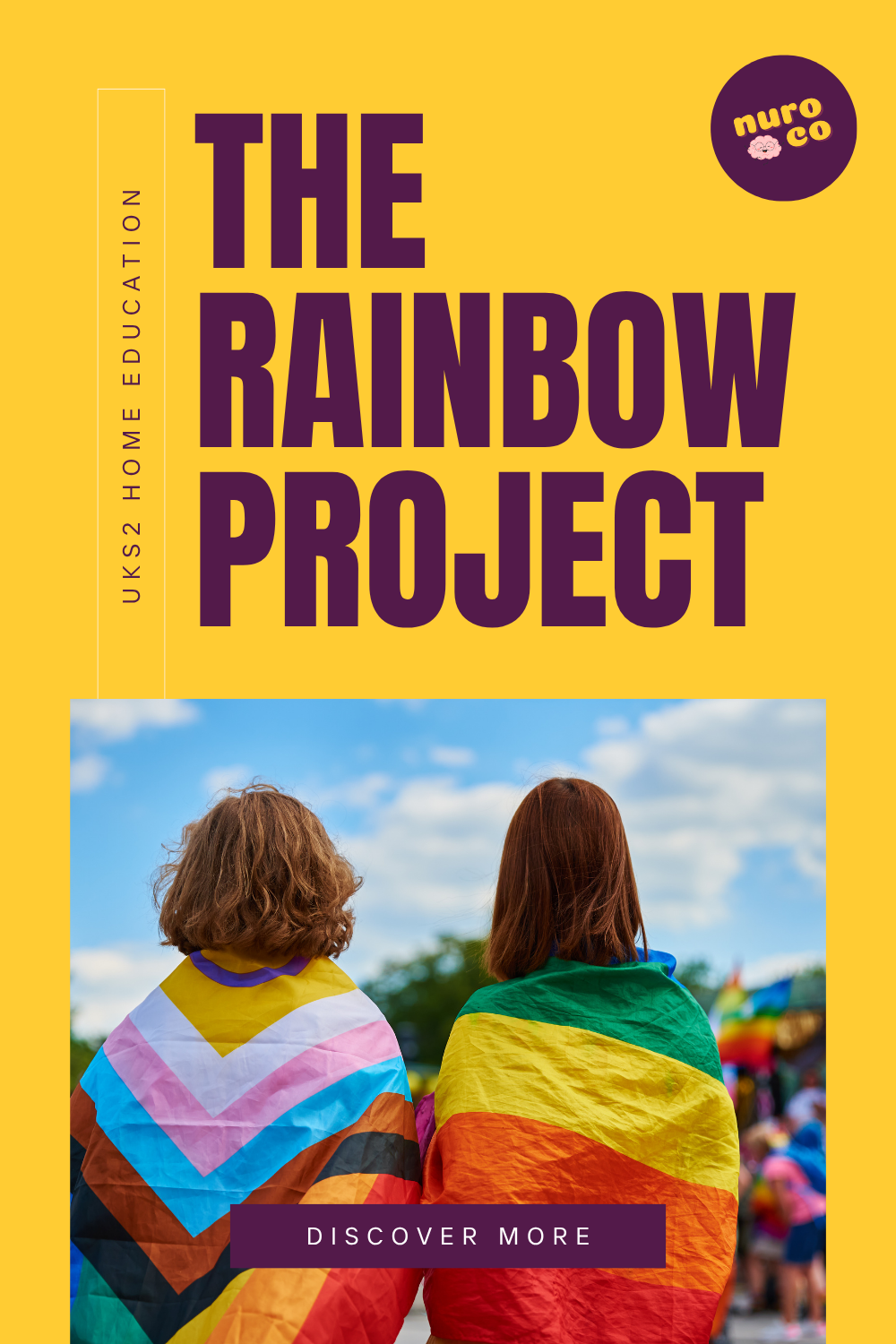
Every voice deserves to be heard.
What if your learner could explore human rights, identity, fairness, and belonging — all through creativity?
The Rainbow Project invites young people to use art, storytelling, analysis, and imagination to understand how equality shapes the world — and how their own voice matters too.
Across eight weeks, learners build a powerful Rainbow Project Exhibition: a personal collection of artworks, reflections, and digital creations that celebrate identity and explore how people work together to make society fairer.
What It’s All About
The Rainbow Project helps learners see that fairness isn’t an abstract idea — it’s something people shape through action, courage, and community.
Each week brings a new theme and creative challenge: from exploring human rights and identity, to learning about LGBTQIA+ history in the UK, to analysing representation in stories and designing inclusive spaces. Learners think deeply about what belonging means, why representation matters, and how people across time have worked for equality.
Through posters, timelines, maps, collages, models, and multimedia projects, learners discover that creativity, critical thinking, and technology can all be tools for understanding fairness in the real world.
This project is flexible, gentle, and neuro-affirming. Every activity offers choice — drawing, voice recording, collage, digital design, story-making — so learners can express their ideas in ways that feel safe and meaningful.
What They’ll Do
Across the eight weeks, your learner will:
Create a human rights poster, zine page, or explainer showing why fairness matters
Explore identity through collage, photography, story, audio, or character design
Learn how LGBTQIA+ changemakers shaped UK history and create a “Story of Change”
Build a timeline of progress — from the first UK Pride to the Equality Act
Compare countries and create maps or imagined worlds exploring global equality
Design an inclusive space using measurement, mapping, symbolic design, and model-making
Analyse representation in books, shows, adverts, and games
Create a “Gallery of Belonging” that celebrates inclusive stories and characters
Share a final creative piece — their message of pride, fairness, and hope
By the end, your learner will have created a complete Rainbow Project Exhibition — a celebration of courage, compassion, imagination, and the belief that fairness is something we create together.
Why It Matters
Children know when something is fair — and when it isn’t. They notice who is included, who is left out, and why.
The Rainbow Project gives learners a safe, thoughtful way to explore these ideas, building empathy and awareness while developing key skills across:
English: analysing media, storytelling, explanation, reflection
History: social change, activism, timelines, lived experience
Geography: global comparisons, mapping, place-based understanding
Maths: measurement, scale, data representation, sequencing
Science & Technology: digital design, media creation, online tools
Art & Design: collage, illustration, model-making, visual symbolism
PSHE & Citizenship: identity, inclusion, respect, human rights, belonging
Most importantly, it helps learners understand that fairness grows when people listen, imagine, and act with care.
Designed for Neurodivergent Learners
Every activity includes neuro-affirming adjustments and flexible pathways, such as:
Choice of response mode (drawing, typing, voice, building, digital design)
Scaffolded prompts to reduce overwhelm
Options to use fictional characters when personal topics feel big
Gentle framing for emotionally sensitive content
Opportunities for sensory breaks and self-paced progress
A strong emphasis on creativity, safety, and empowerment
This is a project where learners can connect emotionally and intellectually, at a pace that feels right for them.
In the End
When the eight weeks are complete, your learner’s Rainbow Project Exhibition becomes:
a record of what they’ve discovered,
a celebration of who they are,
and a reminder that even small voices can spark meaningful change.
Find out more at The Rainbow Project.