Uncharted!: Studying Places
One of the ideas at the heart of Uncharted! is this: If something is hard, it’s worth understanding why - not blaming yourself.
That idea quietly challenges a message many children absorb early on: that environments are neutral, and if something feels difficult, the problem must be them.
Uncharted! takes a different approach.
What this project is really about
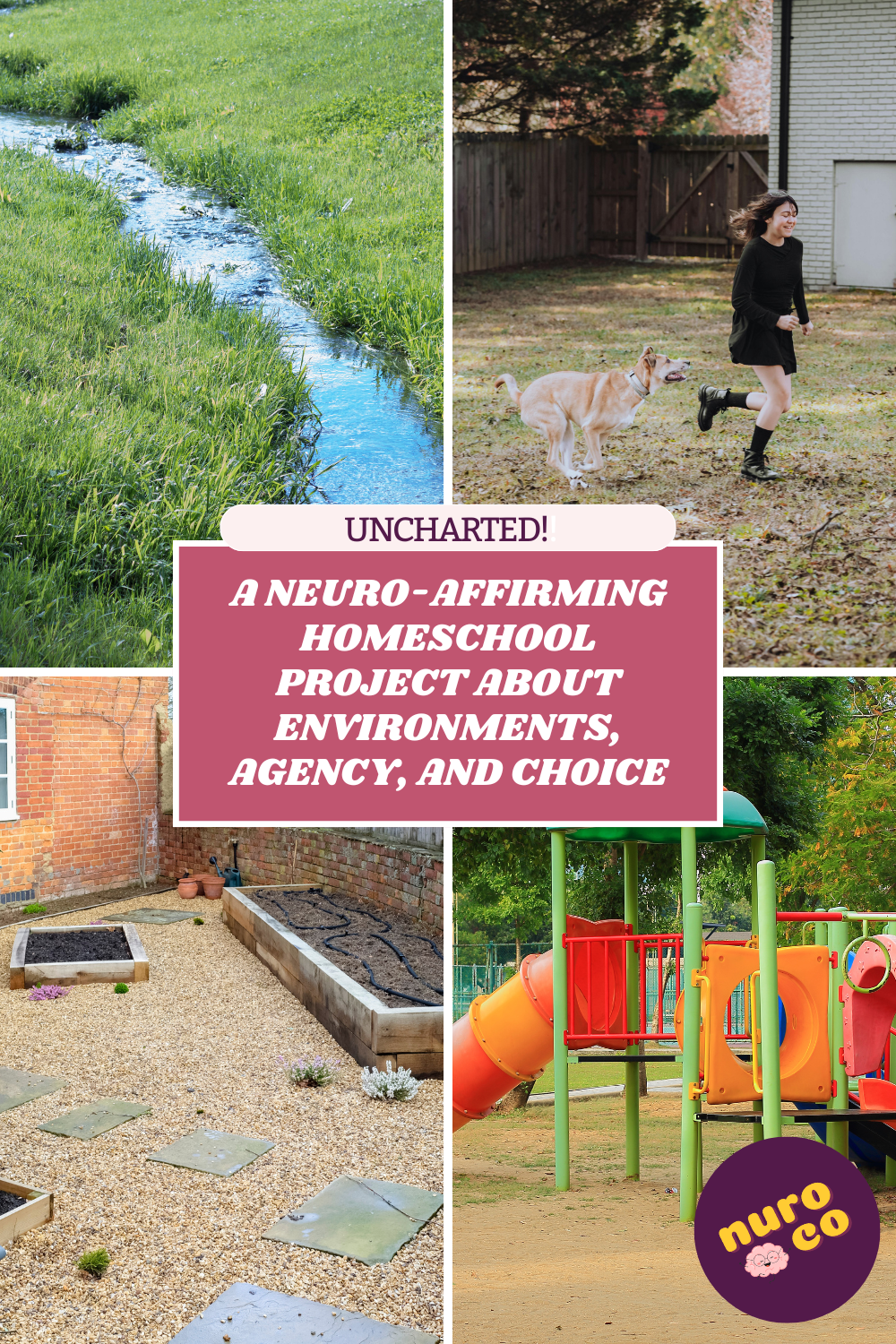
Uncharted! is an 8-week homeschool project for learners in Years 3 - 4 that invites children to explore a real place they can’t fully control - such as a backyard, park, reserve, or familiar outdoor space - and investigate how it works over time.
Uncharted! focuses on careful observation and inquiry:
When does this place feel easy to use?
When does it become tricky or uncomfortable?
What changes across the day, the weather, or repeated visits?
What helps people use this place and what gets in the way?
The goal isn’t to fix a place or make it perfect. It’s to understand its limits and make thoughtful choices in response.
Difficulty as information, not failure
In Uncharted!, difficulty isn’t treated as something to push through or overcome.
Instead, learners are encouraged to treat moments of friction as information:
This space gets very hot in the afternoon.
It’s noisy at certain times of day.
This area works well sometimes, but not always.
These observations aren’t mistakes or shortcomings. They’re data.
By studying what makes a place harder to use, learners begin to see that challenges often live in environments, not inside themselves.
Why this matters, especially for neurodivergent learners
Many neurodivergent children spend a lot of time being asked to adjust themselves to spaces that don’t work for them.
Uncharted! gently flips that script.
Instead of asking:
“Why am I struggling here?”
Learners are invited to ask:
“What about this place makes it hard to use?”
That shift is powerful. It:
removes blame from the learner
validates sensory, physical, and emotional responses
builds language for understanding environments
supports self-advocacy without forcing it
Learners are explicitly supported to:
change how and when they use a space
bring supports
take breaks
avoid certain areas
or decide not to use a place at all
Avoidance, rest, and modification are treated as informed choices, not failures.
Agency without pressure
Another defining feature of Uncharted! is that it doesn’t rush learners toward solutions.
There’s no requirement to:
redesign the space
optimise it
improve it
or make it “work” at all costs
Instead, learners spend time:
noticing recurring patterns
identifying when things don’t work smoothly
recognising what already helps
and understanding how people adapt in realistic ways
Agency shows up through choice:
what to observe
what to record
what feels important enough to report
and how (or whether) to engage
Sometimes the most meaningful outcome is simply realising: This place doesn’t work for me, and that’s useful to know.
Learning that feels grounded and real
Throughout the project, learners take on the role of Field Researchers, keeping optional Field Notes to record what they think is worth reporting back.
These notes might include:
sketches
maps
photos
short observations
questions
or patterns noticed over time
There’s no expectation to record everything, or anything at all. Thinking, noticing, and reflecting all count as learning.
Because the project centres real, re-visitable places, learning unfolds gradually and naturally, without pressure to perform.
A different kind of outcome
Uncharted! isn’t designed to make children tougher or more compliant.
It’s designed to help them:
trust their observations
recognise patterns in the world around them
understand why some spaces feel harder than others
and make informed choices in response
When learners understand that difficulty often comes from environments and systems, something important shifts.
They stop asking, “What’s wrong with me?” And start asking, “What’s going on here?”
That’s a powerful kind of learning, and it lasts far beyond the project.
Check out the Uncharted! project in your region:
Uncharted! - Australia
Uncharted! - UK