Indoor PE Ideas for Homeschool
Physical education doesn’t have to stop when the weather turns bad.
Rainy days, extreme heat, or limited outdoor space can make it difficult to rely on outdoor play for movement. But meaningful physical activity can still happen indoors, often with very little equipment.
In fact, indoor movement activities can be some of the most creative and playful ways to explore physical education in homeschool.
Here are some simple indoor PE ideas that help children stay active while building balance, coordination, strength, and spatial awareness.
Why Indoor Movement Activities Matter
Indoor movement activities can be especially helpful when:
the weather makes outdoor play difficult
you live in an apartment or small space
your child prefers calmer or more structured movement
you want short activity breaks between learning sessions
Short bursts of indoor movement can help children regulate energy levels, improve focus, and bring variety to the homeschool day.
And they don’t need to feel like formal exercise to be effective.
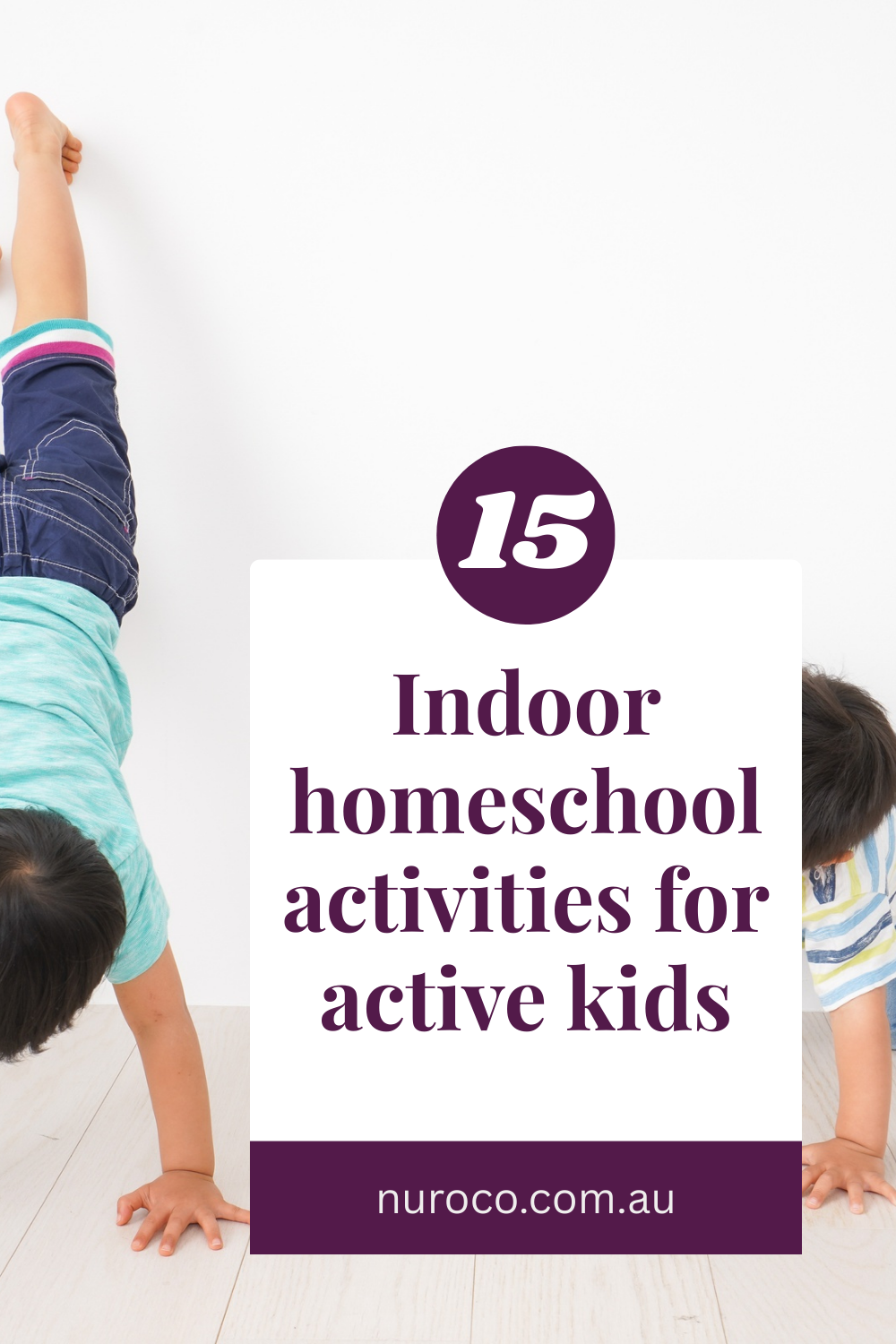
15 Indoor PE Ideas for Homeschool
These simple activities can work in living rooms, hallways, or small open spaces. Most require little or no equipment.
1. Tape Balance Line
Place a strip of masking tape on the floor and walk along it like a balance beam.
2. Cushion Obstacle Course
Create a path using cushions, chairs, and small furniture to crawl under, step over, or move around.
3. Animal Movement Challenge
Move across the room like different animals: frog jumps, bear crawls, crab walks, or penguin waddles.
4. Freeze Dance
Play music and dance. When the music stops, freeze in place.
5. Jumping Distance Test
Mark a starting point and see how far you can jump.
6. Paper Plate Stepping Stones
Use paper plates or pieces of paper as stepping stones across the room.
7. Movement Dice Game
Write movements on a dice (jump, spin, hop, crawl) and perform the action you roll.
8. Balance Challenge
Stand on one foot and see how long you can hold your balance.
9. Slow Motion Race
Move across the room as slowly as possible without stopping.
10. Sock Toss Game
Throw rolled-up socks into a basket from different distances.
11. Movement Copy Game
One person creates a movement and others copy it.
12. Indoor Hopscotch
Create a hopscotch grid using tape.
13. Hallway Shuttle Run
Run or move quickly between two points in a hallway.
14. Crawl Tunnel
Create a tunnel using chairs and blankets to crawl through.
15. Design Your Own Movement Game
Invite your child to invent a new indoor movement activity.
These playful activities help children explore movement while developing important physical skills.
Turning Indoor Movement Into a Learning Project
For some children, movement becomes even more engaging when they take part in designing the activities themselves.
Instead of simply completing exercises, learners can:
design movement challenges
test different layouts or rules
observe which versions are easier or harder
refine their designs over time
This approach turns physical activity into a creative and problem-solving experience.
Some homeschool families enjoy exploring this through project-based learning.
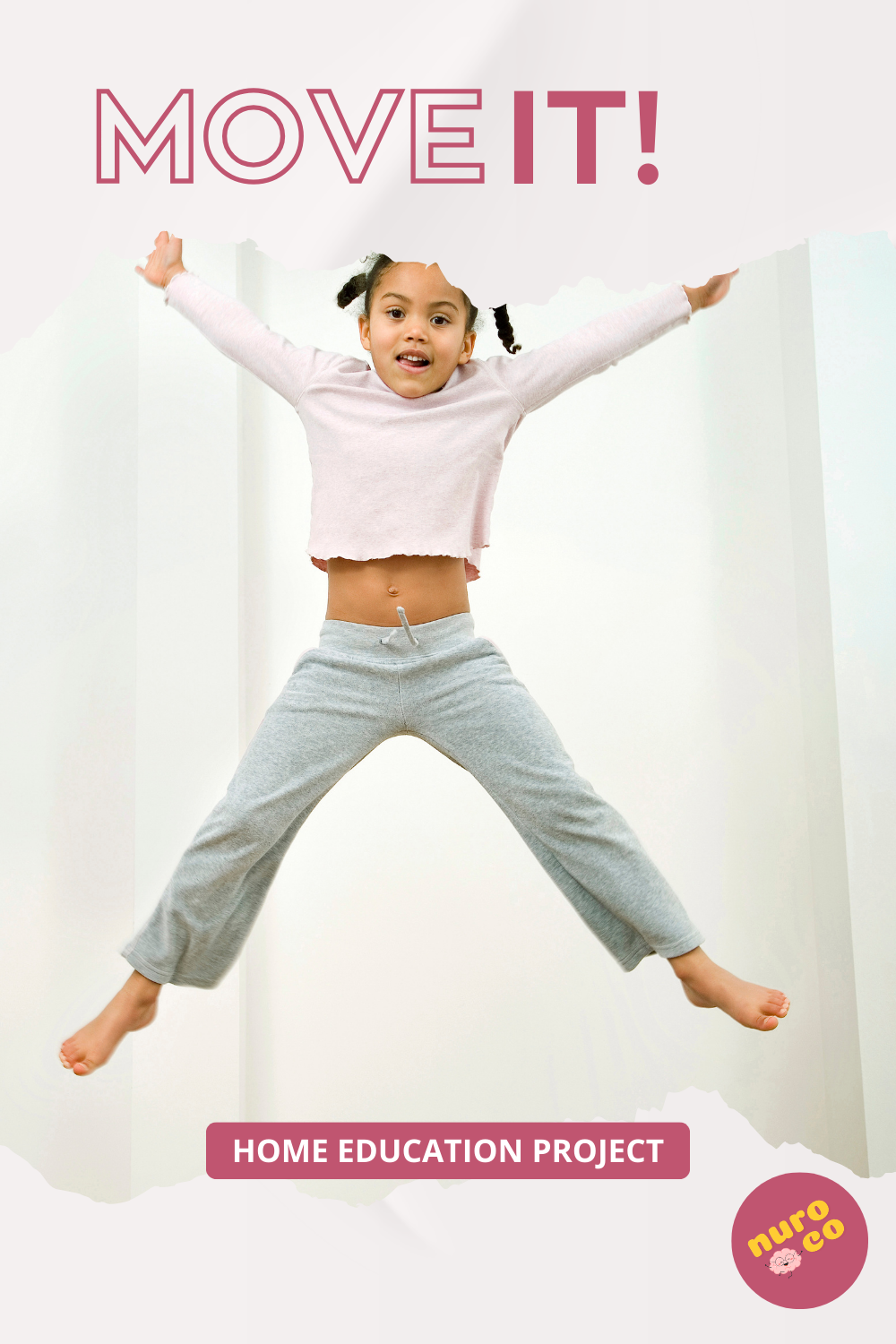
Move It!
Move It! is an eight-week homeschool project where learners design and test their own movement challenges. They experiment with balance, speed, force, and coordination while creating activities that are fun to play.
If your child enjoys building obstacle courses, inventing games, or experimenting with movement, you can learn more about the project here:
→ Explore the Move It! homeschool project: Move It! Australia or Move It! UK
Making Movement a Natural Part of Homeschool
Physical activity doesn’t have to be limited to outdoor play or organised sports.
Indoor movement can include:
creative challenges
obstacle courses
balance experiments
movement games
playful design activities
Even a small space can become a place for exploration, experimentation, and movement.
And when movement feels playful and self-directed, children often become much more enthusiastic about physical activity.