When Homeschooling Wasn’t the Plan
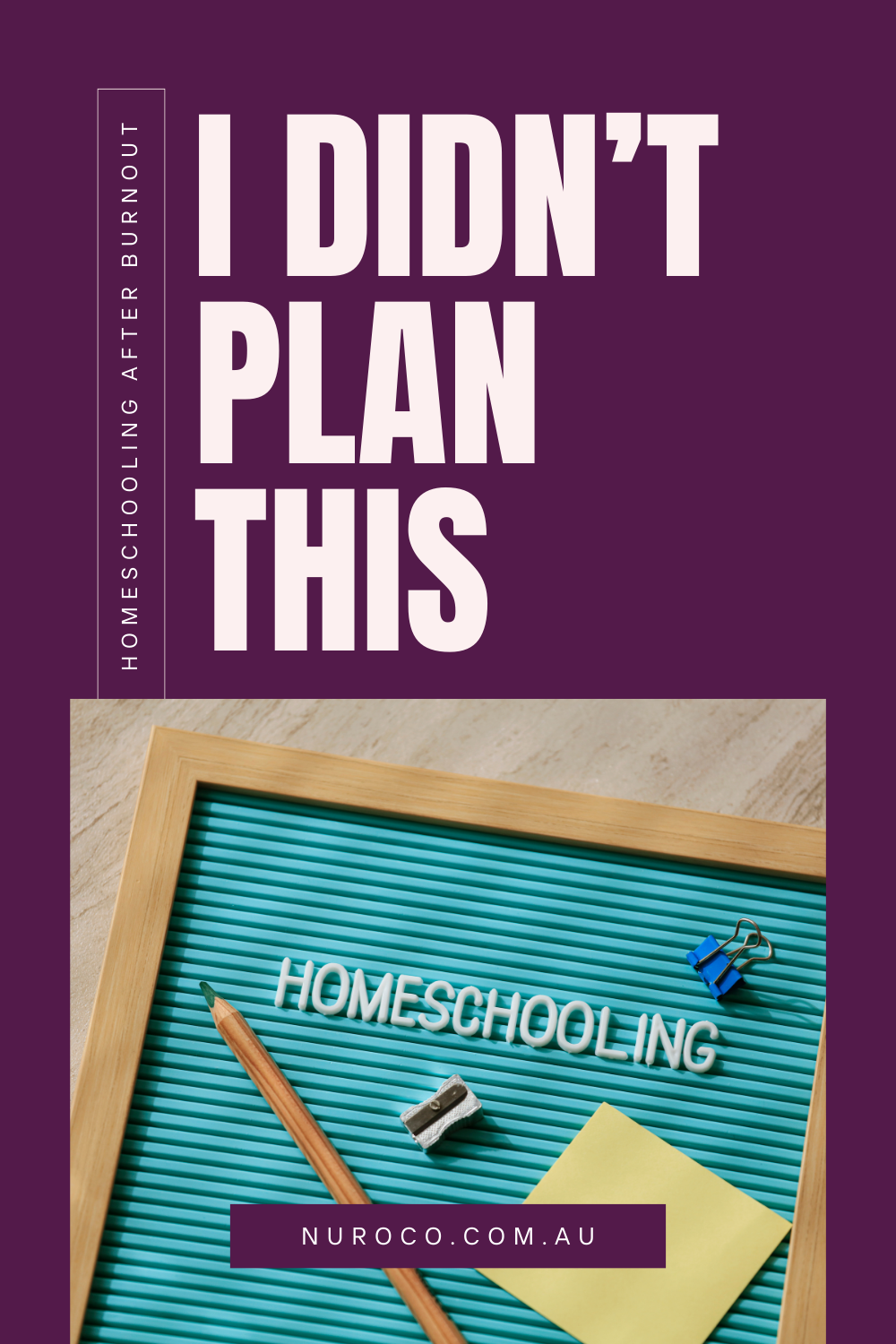
We didn’t plan to homeschool.
It wasn’t something I’d been quietly researching for years or imagining as a lifestyle shift. There were no colour-coded schedules or long-term learning plans waiting in the wings. Homeschooling arrived suddenly, in the middle of a very hard season, when my child was struggling and something had to change.
If you’re reading this because you’ve found yourself in a similar place - homeschooling not by choice, but by necessity - I want you to know you’re not alone.
For many families of neurodivergent children, homeschooling doesn’t begin with excitement. It begins with burnout, anxiety, school can’t, or mental health concerns that make the usual options feel impossible. The decision often isn’t “Should we homeschool?” so much as “What do we do now?”
In those early days, my focus wasn’t on creating an ideal learning environment. It was on getting through each day. On keeping my child safe. On finding something - anything - that felt like it might help.
At the time, buying a curriculum-in-a-box wasn’t really a pedagogical decision at all, it was a practical one.
My child was very unwell, and my own mental health was under significant strain. I needed something, or someone, to take the pressure of homeschool registration off my plate. I needed a way to have it sorted, without having to think too hard about it.
The boxed curriculum did that. It handled the paperwork. It gave me language I could use. It allowed me to focus on supporting my child through a difficult period.
But by its very nature, it also quietly reinforced an idea I hadn’t had the space to question yet: that homeschooling meant reproducing school at home.
Once we were set up that way, it was hard to see alternatives. The daily rhythm, the expectations, and the sense of what “counted” as learning all came pre-shaped. Even when it wasn’t working, it felt risky to step outside the structure we’d been given.
Gradually, though, I did start to step away.
Not all at once, and not confidently. I followed my child’s interests when I could. I let tasks slide. I paid more attention to what was actually engaging them, and less to what was meant to be completed.
And then, another worry crept in. If this isn’t school-at-home, is it enough?
Without worksheets or finished products, learning started to look messier. Often richer, but harder to explain. I could see curiosity, problem-solving, and thinking. I could hear it in conversations and watch it in projects that grew organically from my child’s interests.
What I couldn’t yet see was how to make that kind of learning legible to the systems that required evidence.
That tension between what I could see working for my child and what I worried might be acceptable, stayed with me for a long time.
On one hand, learning began to feel more doable. When I followed my child’s interests, engagement returned in small but noticeable ways. There was more conversation, more curiosity, more energy. Learning happened through reading, drawing, building, researching, talking, and wondering - often in ways that didn’t fit neatly into a lesson plan.
On the other hand, I carried a constant, low-level anxiety that I wasn’t doing enough.
Without a clear framework, it was hard to trust that this counted. I worried about registration requirements. I worried about reporting. I worried that if someone looked too closely, what we were doing would seem vague or insufficient - even though I could see my child learning meaningfully.
What I didn’t yet understand was that the problem wasn’t the learning, it was the language.
Schools are very good at naming learning in certain ways: outcomes, subjects, evidence, progress. Interest-led learning doesn’t naturally present itself in those terms, not because it’s less rigorous, but because it’s organised around curiosity rather than curriculum headings.
Once I realised that, I started to think about how I could describe the learning that was happening.
I began to notice learning more carefully. Not just what my child was doing, but what they were thinking, explaining, comparing, testing, and revising. I learned to capture small moments - a conversation, a sketch, a half-built prop - and recognise them as legitimate evidence of learning, not placeholders for something “better.”
Slowly, I learned how to frame interest-led learning in ways that homeschool authorities understood, without forcing it into worksheets or rigid programs.
It wasn’t about pretending learning looked different than it did, it was about learning how to translate.
I second-guessed myself constantly. I worried about whether I was using the right words. I compared what we were doing to examples I’d seen elsewhere and wondered if I was still missing something obvious.
But over time, the anxiety eased.
The more I practised noticing learning as it happened, rather than trying to manufacture it, the more confident I became. I could see how a single interest connected to multiple areas of learning. How a project that began as curiosity grew into research, problem-solving, communication, and reflection. How learning didn’t need to be continuous or tidy to be real.
Just as importantly, I learned that homeschool registration and reporting didn’t require perfection.
Once I understood that, things felt lighter. I didn’t need to justify every choice or prove that learning looked a certain way. I needed to describe what was happening honestly, using language that made sense to the system - while still honouring my child’s needs.
nuro co grew out of that experience - not from a polished homeschool journey, but from a very real one shaped by burnout, uncertainty, and learning as we went. It came from wanting to create the kind of support I needed early on: resources that respect children’s interests and nervous systems, while also helping parents meet registration and reporting requirements in a way that feels manageable.
Learning how to support your child and navigate the system takes time. Most of us figure it out gradually, in the middle of imperfect days, while doing the best we can with the capacity we have.