Homeschool Activities That Actually Work (Without Worksheets)
Searching for the next activity?
If you’ve ever searched for homeschool activities, you’ll know how much is out there.
Craft ideas, printables, quick projects - things to fill an afternoon or try something new.
And sometimes, that’s exactly what you need. A simple activity can be a great reset on a long day, or an easy way to follow a spark of interest without overthinking it.
But if you find yourself constantly searching for the next activity, it can start to feel a bit scattered - like you’re always starting again, without anything really building or sticking.
That’s where things can become tiring. Not because you’re doing anything wrong, but because the structure itself asks you to keep coming up with something new.
A different way to approach this is to think in terms of projects instead of standalone activities, where each small task connects to something a little bigger over time.
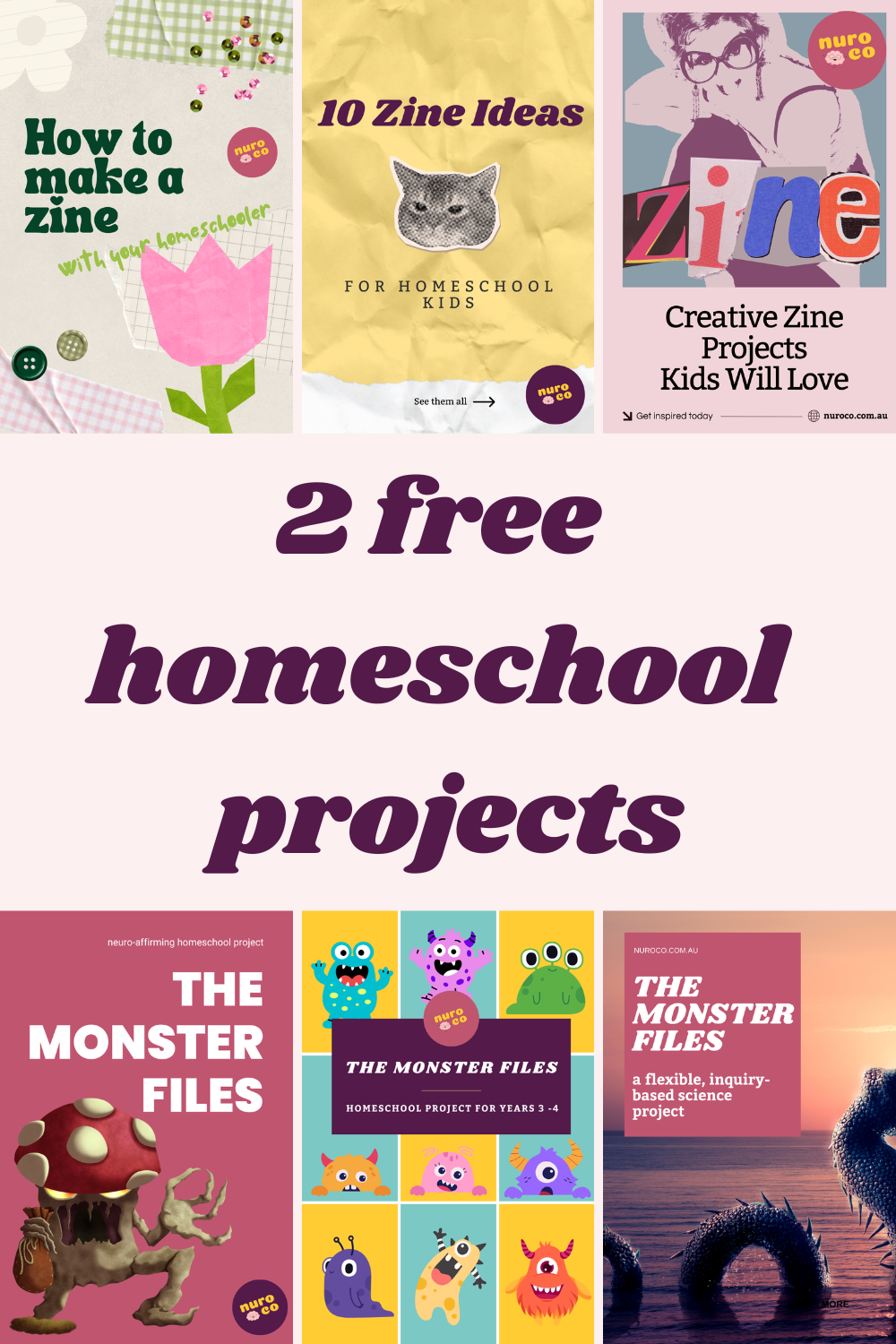
If you’re curious what that can look like, you might like to start with a free project here:
The Monster Files (Years 3–4)
Zine Zone (Years 5–6)
They’re designed to be easy to begin, flexible to follow, and low-pressure to complete.
What actually makes a homeschool activity work
Not every activity needs to turn into a big project.
But the ones that tend to feel more meaningful (and easier to sustain) often have a few things in common.
They build over time
Instead of being finished in one sitting, they can be returned to, added to, or developed further.
This doesn’t have to be complicated - it might just mean revisiting an idea, refining something, or noticing new details.
They connect to your learner’s interests
Activities tend to go more smoothly when they’re grounded in something your learner already enjoys or feels curious about.
That might be animals, games, stories, design, movement - anything that gives the activity a sense of relevance.
They allow different ways to engage
Some learners will want to draw. Others will talk things through, build something, research, or move between a few different approaches.
Activities that leave space for this tend to feel more accessible and less pressured.
They create natural evidence of learning
This might look like sketches, notes, photos, models, conversations, or small creations along the way.
Nothing needs to be polished or “finished,” but over time, these pieces begin to show what your learner has explored and understood.
Homeschool activities that can stretch a bit further
If you’re looking for activities that feel a little more connected - without becoming rigid or overwhelming - it can help to start with the kind of engagement your learner naturally gravitates toward.
For imaginative learners
Some learners naturally think in stories, characters, or imagined worlds.
Activities that give them space to invent, explore, and build on ideas over time can feel especially engaging.
You might notice this looks like:
creating creatures or characters
inventing worlds or settings
building backstories or “what if” scenarios
These kinds of activities can gradually deepen into questions about environment, survival, relationships, or systems, without needing to feel formal.
If that feels like a fit, you might like to explore:
The Monster Files (a gentle, free starting point)
Mythos & Maps (for deeper world-building)
For hands-on makers
Some learners prefer to think with their hands - experimenting, building, and figuring things out as they go.
Activities here might include:
creating with found or collected materials
designing costumes, props, or objects
building simple prototypes or models
What often works well is giving space to experiment first, before expecting a finished product.
If your learner enjoys this kind of process, you might like:
For planners, organisers, and system-thinkers
Some learners are drawn to structure - how things fit together, how systems work, or how spaces are organised.
You might see this in:
designing towns, maps, or environments
planning layouts or experiences
creating rules, categories, or systems
These activities can build naturally into problem-solving, logic, and design thinking.
If that sounds familiar, you might like:
For low-energy or overwhelmed days
Not every day needs to be productive or high-output.
Some learners (especially during periods of fatigue, anxiety, or burnout) benefit from slower, quieter activities that still allow for meaningful engagement.
This might look like:
observing and noticing small details
sketching, journaling, or collecting ideas
gently exploring a place or topic over time
There’s no pressure to produce something finished, the value is in the noticing.
For this kind of pace, you might like:
For active, movement-based learners
Some learners need to move to think.
Activities that involve movement, experimentation, and variation can help channel that energy into something purposeful.
You might try:
designing games or physical challenges
changing rules and testing what happens
exploring coordination, timing, or strategy
If your learner thrives here, you might like:
When activities start to feel harder than they should
One-off activities can be a helpful part of homeschooling.
But over time, they can quietly shift more work onto you than you might expect.
Not because the activities themselves are difficult, but because nothing is holding them together.
You might start to notice things like:
you’re making lots of small decisions throughout the day
it’s hard to pick things back up once you’ve stopped
learning is happening, but it’s not always easy to see or capture
It’s a subtle kind of friction.
Not overwhelming on any one day, but something that builds over time.
Letting activities connect
This is where a small shift can make things feel lighter.
Instead of thinking in terms of separate activities, you might start to let them connect - even loosely - around a shared idea or focus.
There’s no need to turn everything into a big project.
It might simply look like:
returning to the same idea across a few days
adding something new to what’s already been started
letting one activity lead naturally into another
When that happens:
you don’t have to keep resetting
your learner has something familiar to come back to
and the learning becomes easier to notice over time
Where to start
If you’d like something that already has that sense of continuity built in, starting with a small project can make it easier.
For younger learners (Years 3–4):
The Monster Files: A gentle, imaginative science project where your learner explores how a creature might live and survive.
For older learners (Years 5–6):
Zine Zone: A flexible creative project where learners explore ideas, interests, or identity through their own zine.
Both are designed to be:
easy to begin
flexible to pause and return to
low-pressure to follow
You can use as much or as little as feels helpful.