What Happens When Your Child Knows More Than You Do?
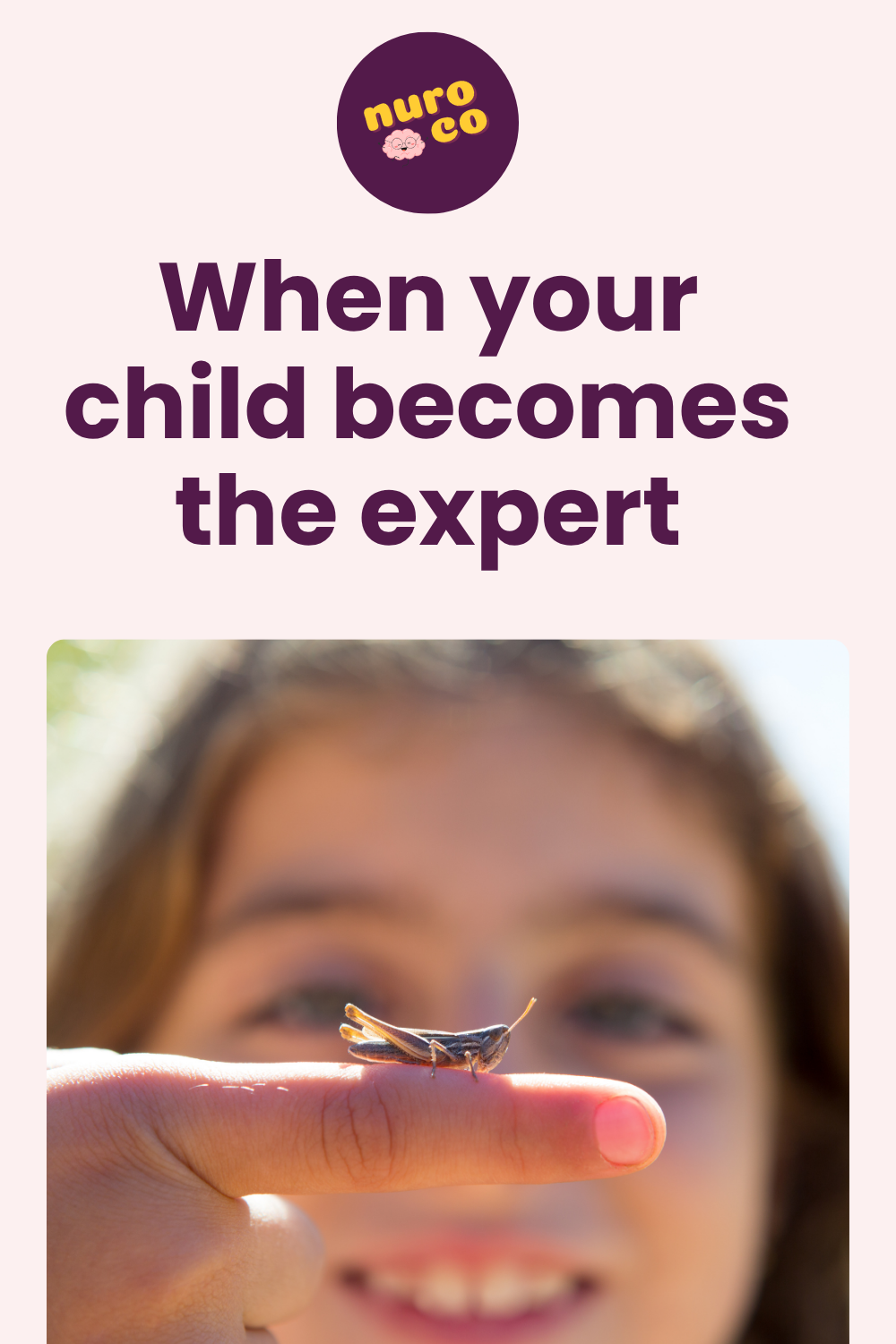
At some point in interest-led homeschooling, your child is probably going to know more than you do.
You might be able to nod convincingly for a while, but eventually you'll be out of your depth.
They'll be explaining an obscure game mechanic, a particular species of dinosaur, the workings of a computer component or some detailed piece of fictional lore, and you'll realise you've lost the thread several minutes ago.
And perhaps that's exactly what we should expect. If children have the opportunity to follow their interests deeply enough, eventually they're going to reach places we haven't been.
So what happens when we can no longer teach the thing they're learning?
Homeschooling doesn't require us to know everything
So if we're responsible for our child's education, don’t we need to know enough to teach them?
What happens when your child wants to learn Japanese and you don't speak Japanese?
Or they're fascinated by coding and you've never written a line of code?
Or they're trying to build a gaming PC and your contribution to the conversation is roughly, I know that one is the graphics card?
Trying to stay one step ahead of a deeply interested child can become an impossible job.
Thankfully, it doesn't have to be our job.
As children move further into an area of interest, our role can change.
Instead of being the person with the answers, we can become the person who helps them reach the answers.
Sometimes our job is access
A child can be intensely curious about something and still need help getting further into it.
They might need a library card.
A piece of software.
A trip somewhere.
Help finding a club or community.
Someone who knows more than either of you do.
They might find a course they'd like to take but need help working out whether it's appropriate. They might discover that the information they need is buried in a book that's difficult to find. They might want to contact an expert but have no idea how to go about it.
None of this requires us to become experts ourselves.
Our contribution is simply helping to open the next door.
We can help without having the answers
Not knowing much about a subject doesn't mean we have nothing useful to contribute.
In fact, being the less knowledgeable person in the conversation can be useful.
We can ask:
How do you know that?
Is everyone sure that's how it works?
Where did you find that information?
Does that source seem reliable?
Why do you think those two explanations are different?
These aren't questions designed to test whether the child has learned the correct information.
They're the kinds of questions that naturally arise when someone is explaining something to a person who genuinely doesn't know.
And because we don't already know the answer, the conversation can become less like a quiz and more like an actual exchange of ideas.
Knowing more than us changes the conversation
There's something else that happens when children develop expertise of their own.
They get to be the knowledgeable person in the room.
They get to explain something.
Correct us.
Show us a detail we missed.
Tell us why the Pokémon cards are, in fact, very much not the same.
And we get to take that knowledge seriously.
That doesn't mean pretending to be fascinated by every detail of every interest. Sometimes there are only so many explanations of a game's character lore a human being can absorb in one afternoon.
But there's a difference between being interested in the subject and recognising the expertise.
We can say, truthfully:
You know much more about this than I do.
That's a very different experience from always being positioned as the learner waiting for an adult to provide the correct answer.
Eventually, they may need other people
There are limits to what we can provide.
That's not a failure of homeschooling. It's how learning works.
Someone becoming serious about crochet might eventually benefit from talking to an experienced fibre artist.
Someone getting deeper into coding might find a community where people are building things far beyond anything we could help them with.
The further children travel into a field, the more likely they are to encounter other people who can take them further.
Books, videos and websites can do a lot.
And so can communities, mentors, clubs, workshops, volunteering, courses and conversations with people who actually do the thing.
Our role doesn't disappear when someone else knows more than we do.
We're just no longer the only person in the learning environment.
We don't have to turn ourselves into experts
Perhaps this is one of the freedoms of interest-led homeschooling.
Our children's interests don't have to be limited to the things we already know how to teach.
They can wander into animation and zoology and railway engineering and costume construction and ancient languages.
They can ask questions we can't answer.
They can attempt things we couldn't make ourselves.
They can become extraordinarily knowledgeable about subjects we'd never have chosen.
And we don't have to race ahead, desperately trying to learn enough to teach the next lesson.
We can sit beside them while they figure something out.
We can find someone who knows more.
And we can help them get the tool they need.
Because perhaps our job was never to know everything. It was to help make learning possible.