The Kids Who Redesign Everything
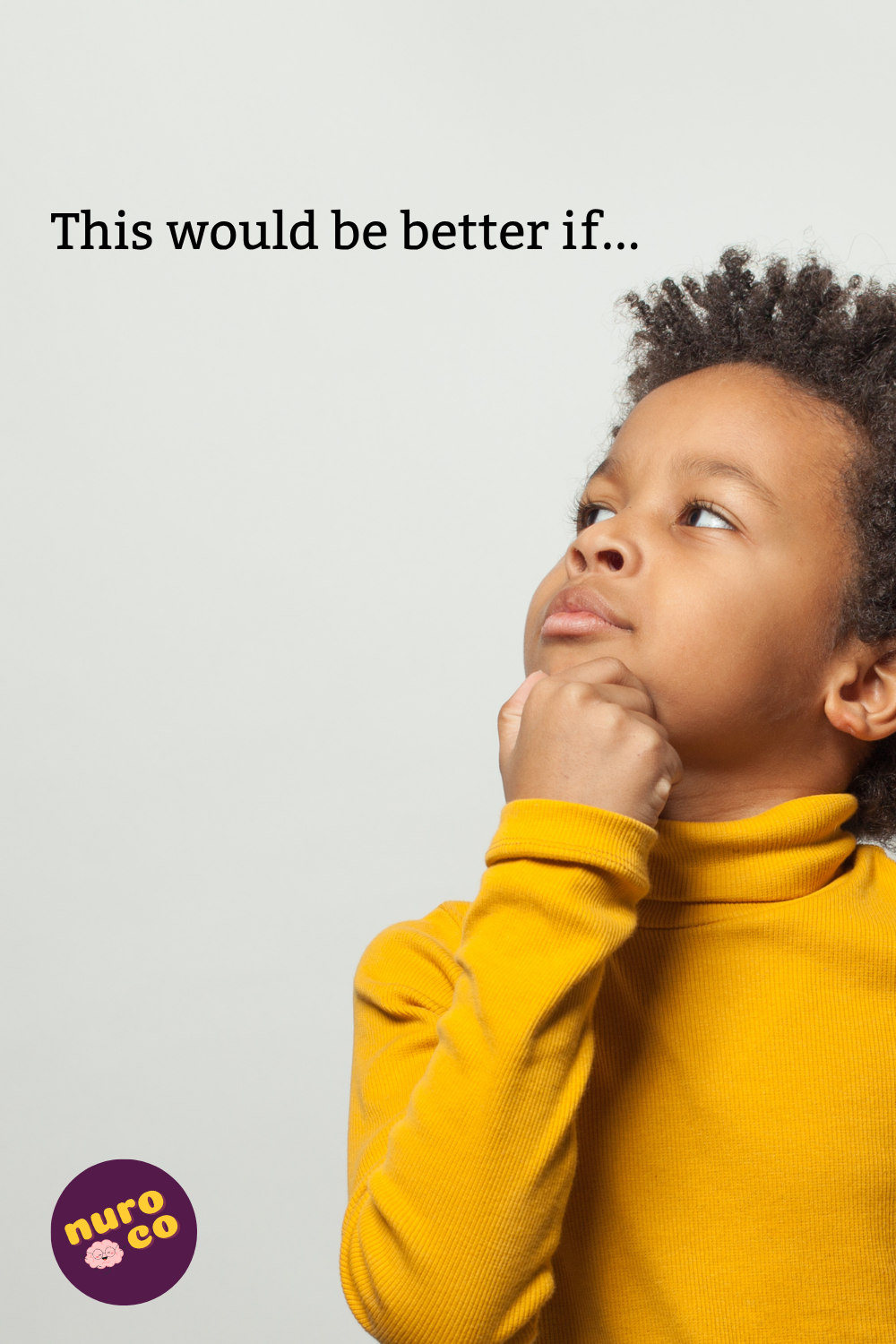
“This would be better if…”
Some children seem particularly quick to notice the gap between how something is and how it could be.
It might be a game with a rule they don't like, or a bedroom layout that needs changing again. Sometimes it sounds like criticism, sometimes it's just a passing comment, and sometimes it turns into an elaborate plan for an entirely different version.
But, while the initial “I’d do it differently” thought seems simple, there’s quite a bit happening already.
First, you have to notice what's already there
Before you can redesign something, you have to understand something about the existing version.
What is it supposed to do?
Who uses it?
How do the different parts work together?
Where does it work well?
Where does it become frustrating?
A child who wants to rearrange their bedroom may be thinking about storage, movement, privacy, comfort or how they actually use the room.
The proposed solution might not always be practical. But the noticing that came before it is important.
Better for who?
This is where redesigning something can become much more complicated.
A great playground for a three-year-old probably isn't the same as a great playground for a twelve-year-old. Even something as simple as changing the rules of a game raises questions.
Does the new rule make the game easier?
Harder?
Faster?
More chaotic?
Fairer?
More fun for one player but less fun for everyone else?
There isn't always one objectively better design. There are people with different needs, preferences and priorities. And once those people enter the picture, I'd make it better becomes a much more interesting problem.
Then reality gets involved
In our heads, redesigning something can be simple.
Add a waterslide to the local pool!
Then come the constraints.
Where will it fit?
How much will it cost?
Is it safe?
What materials would you need?
What happens to the environment around it?
Can people actually get there?
What else needs to use that space?
What happens when two important needs conflict?
Constraints can sound like the boring part of designing something, but they're often where the problem becomes more interesting.
You don't have to actually build it
A child doesn't need to construct a working prototype for redesigning to involve serious thought.
The entire idea can live in a sketch.
Or a Minecraft build.
Or a map.
Or a rearranged bedroom.
Or a list of new game rules.
Or an extremely detailed explanation delivered to you while you're trying to make dinner.
The thinking can be in comparing possibilities, noticing problems and making decisions.
A finished product can be satisfying, but the interesting part may have happened long before anything was built.
Some children notice possibilities everywhere
Not every child is particularly interested in redesigning things.
Some would much rather understand how the existing thing works.
Some want to make something entirely their own.
Some want to collect, research, move, care for something or disappear into a fictional world.
But there are children who seem especially alert to the possibility that things could be different.
They notice awkward systems, missing features, unfair rules. Things that could be easier, stranger, fairer, more accessible or simply more fun.
Those observations don't necessarily need to become a formal design project.
Sometimes it's enough to notice what's already happening when a child looks at the world and thinks:
I could make that better.
Want somewhere for those ideas to go?
Several nuro co projects give learners the chance to question, design and rethink the world around them.
In Tiny Town Planners, learners explore what makes a town work well for the people who live there, then design a town of their own.
In The Great Theme Park Project, they make decisions about rides, spaces, visitors, systems and all the competing needs involved in creating a theme park.
And in Systems & Signals, learners look more closely at how systems work, how their parts fit together and what happens when something changes.
Each project includes flexible learner activities, parent guidance, curriculum connections and support for documenting the learning along the way.