
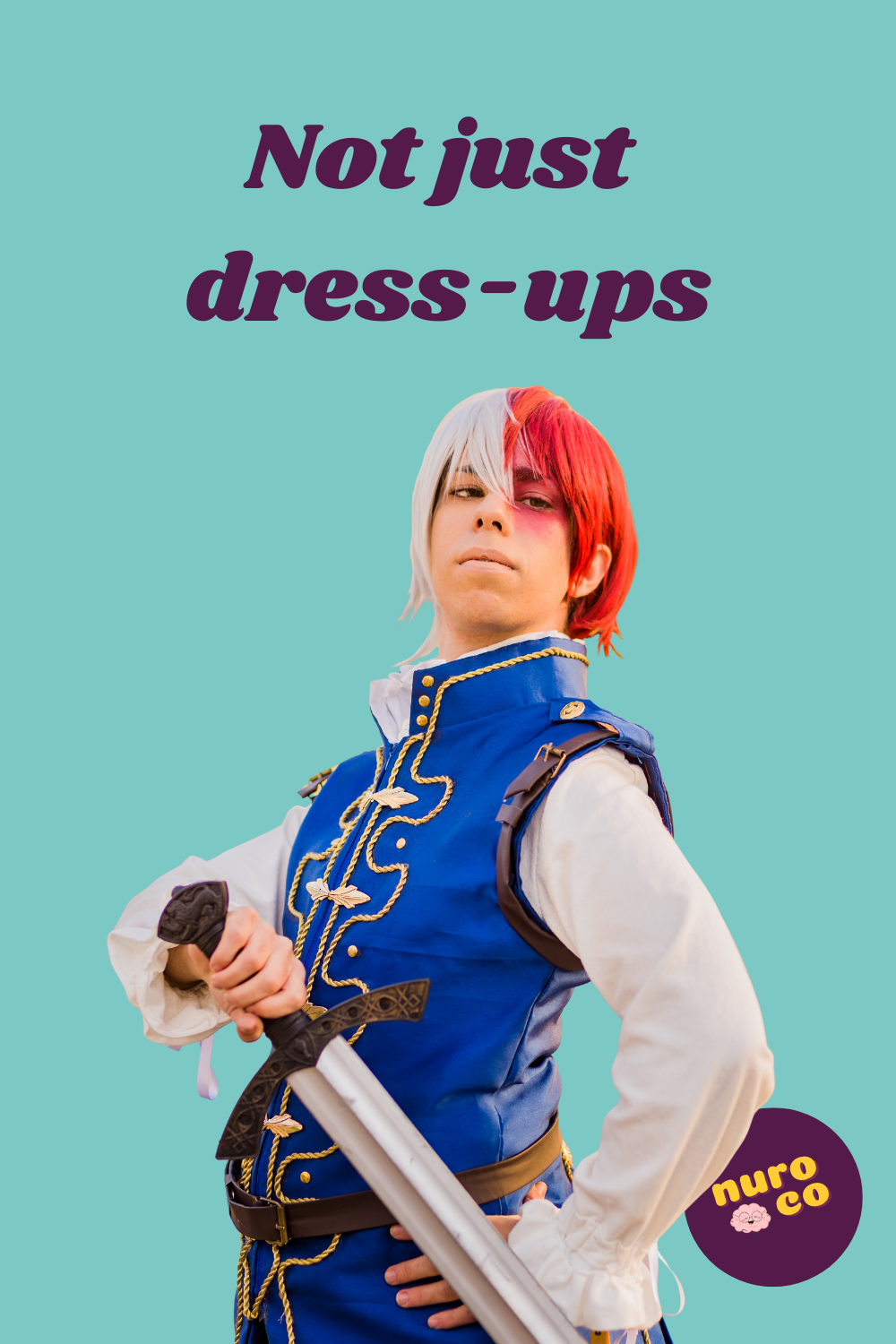
Why Cosplay is not just dressing up
There are a lot of reasons families homeschool.
Sometimes it’s about flexibility. Sometimes it’s about values.
And sometimes, especially for many neurodivergent and LGBTQIA+ kids, it’s because they don’t feel like they fit anywhere they’ve been.
Carrying that on top of everything else can make it even harder to engage, to participate, or to feel any sense of ownership over their world.
That’s part of why projects like cosplay can matter more than they seem on the surface.
Cosplay is more than dress-ups
From the outside, cosplay can look like a craft project.
Something creative, maybe a bit messy, but ultimately just “making a costume.”
But for many kids, that’s not what’s actually happening.
Cosplay is about choosing how you want to be seen.
It’s about stepping into a version of yourself that feels more right, even if it’s exaggerated, fictional, or still in progress.
And importantly, it’s something they control.
They choose:
the character
the style
the level of accuracy (or not)
the materials
the meaning behind it
There’s no single correct version.
For kids who are used to being corrected, redirected, or misunderstood, that shift matters.
How cosplay helps kids explore identity safely
A learner might:
recreate a character they deeply connect with
redesign a character to better reflect themselves
invent someone entirely new
They might play with:
gender expression
personality traits
aesthetics
confidence
And because it’s framed as a character, it creates just enough distance to feel safe.
They’re not being asked to explain themselves.
They’re allowed to explore.
Why creative control matters
For kids who don’t feel like they fit, a lot of their experiences involve adapting to systems that weren’t designed for them.
Cosplay flips that.
There’s no fixed pathway.
Instead, the process can look like:
sketching ideas
jumping straight into making
changing direction halfway through
abandoning one idea and starting another
focusing on one small detail for hours
or keeping it simple and getting it done quickly
All of those are valid.
And that flexibility is what allows the learner to actually stay engaged.
What kids are learning through cosplay
Even when it looks like crafting, there’s a lot going on beneath the surface.
Learners are:
making design decisions
solving practical problems (how do I attach this? how do I make this shape?)
working with materials and constraints
adapting when things don’t go to plan
developing persistence in a way that feels self-directed
But the difference is they’re doing it because they care about the outcome.
Not because they were told to.
Cosplay doesn’t have to feel complicated
One of the biggest barriers families feel with something like cosplay is the idea that it has to be elaborate. It doesn’t.
Cosplay can be:
a simple accessory
a mask made from paper
a reworked outfit from clothes already at home
a small prop
or a full costume, if that’s what your learner wants
There’s no minimum level of complexity required for it to be meaningful.
In fact, for many learners, keeping it small is what makes it possible to start at all.
Helping kids create something that fits them
When a child doesn’t feel like they fit, the instinct is often to try to help them find the right place.
The right curriculum, the right approach, the right environment.
They all matter.
But sometimes what matters just as much is giving them the chance to create something that fits them instead.
Something shaped by their interests, their choices, their pace.
Cosplay is one way to do that.
Not because it’s particularly academic, but because it gives learners a rare combination of freedom, control, and expression.
And for some kids, that’s exactly what’s been missing.
Cosplay Quest
If your learner is drawn to characters, design, or creative expression, you might want to take a look at Cosplay Quest.
It’s an 8-week, flexible project designed to support learners to:
develop their own character or reinterpret an existing one
experiment with materials and design ideas
create something tangible at their own pace
and follow a process that actually works for them
No pressure to get it “right.” No expectation to finish a perfect costume.
Just space to explore, create, and build something that feels like theirs.
