A Simple Way to Plan a Year of Homeschool (Years 5–6)
Planning a full year of homeschool can feel like a lot.
There’s the pressure to cover everything. The uncertainty around requirements. And the very real question of whether your child will actually engage with what you’ve planned.
Most advice seems to fall into two extremes - either highly structured, subject-by-subject schedules, or very loose ideas that leave you figuring out the details yourself.
But there’s a middle ground.
One that gives you enough structure to feel confident, without turning your days into something rigid or overwhelming.
Why full-year planning feels so hard
When you try to plan week by week, subject by subject, the year quickly becomes very big.
You’re not just thinking about what to do next week - you’re trying to map out months of learning, engagement, and documentation all at once.
For many families, the challenge isn’t motivation, it’s the weight of holding all of that together.
Are we covering enough?
How will I show what we’ve done?
What happens if this stops working halfway through?
It’s a lot to carry.
A simpler way to plan a year
Instead of planning 40+ individual weeks, you might plan a year around a small number of meaningful projects.
Each project becomes a space where your learner can explore ideas, build skills, and create something over time - rather than constantly switching between disconnected tasks.
Because projects naturally bring together different areas of learning, you’re not needing to separate everything into subjects. And because they unfold over multiple weeks, there’s more room to go deeper, slow down, or adjust as needed.
The structure is still there, it just feels lighter.
What this can actually look like
Here’s one example of how a year might look for a Years 5–6 learner, using four longer projects across the year.
Term 1: Game Makers
Your learner steps into the role of a game designer - exploring what makes games engaging, then creating their own.
They might:
analyse the structure of games they already enjoy
design rules, systems, and challenges
build a playable prototype using simple materials or digital tools
Along the way, they’re working with writing, maths, and problem-solving — but in a way that feels purposeful and connected.
Explore the Game Makers project here.
Term 2: Planet Protectors
This project invites your learner to explore environmental issues that matter to them and imagine possible solutions.
They might:
investigate real-world challenges (local or global)
research and organise information
design a solution, campaign, or awareness piece
This naturally brings in science, critical thinking, and communication, without needing to separate them into subjects.
Explore Planet Protectors here.
Term 3: Cosplay Quest
Here, your learner designs and creates a character or costume inspired by something they love.
They might:
sketch and plan their design
experiment with materials and construction methods
refine their work over time and share the final result
There’s a strong focus on creativity, but also on planning, measurement, and iteration.
Term 4: ReInventors
This project centres on curiosity and experimentation, using a mix of found, collected, or chosen materials.
They might:
gather interesting objects from around the home or community
explore how materials move, connect, or change
design and build original creations through trial and adjustment
For many learners, this kind of open-ended making creates space for deeper thinking and problem-solving.
Adding a shorter project along the way
Some families like to include a shorter, more contained project alongside these, either at the beginning of the year or between longer projects.
Slime Lab is one option.
It’s a four-week project where your learner experiments with different slime recipes, tests variables, and develops their own final product.
Because it’s hands-on and relatively quick to complete, it can be a helpful way to:
ease into project-based learning
build confidence early on
or reset after a longer project
A flexible structure, not a fixed plan
This is just one example.
Some learners might spend longer on a project, or follow a different set of interests. The goal isn’t to follow a rigid plan, it’s to have a structure that makes the year feel manageable, while still leaving room for adjustment.
But what about “covering everything”?
It’s a common concern and a completely valid one.
When learning doesn’t look like traditional school, it can be harder to see how everything fits.
But coverage doesn’t need to happen in small pieces every week.
It can happen across a project, and across a year.
A single project might include:
research and writing
problem-solving and maths
design, planning, and reflection
And when those experiences are collected over time, they begin to form a clear picture of learning.
A note on planning and documentation
For many families, the hardest part isn’t the learning itself, it’s feeling confident that what you’re doing will meet requirements.
Questions like:
Is this enough?
How do I show what we’ve done?
What does this look like for registration?
can sit in the background and make everything feel heavier.
That’s where having some structure and support can make a real difference.
When planning, learning, and documentation are connected, you’re not needing to track everything separately. And if you need it, having the option to talk things through, to ask questions, adjust your plan, or get a clearer sense of how it all fits, can take a lot of pressure off.
What this approach can give you
A project-based structure doesn’t remove all the work of homeschooling. But it can change the way it feels.
You might notice:
fewer daily transitions between subjects
more sustained engagement over time
clearer, more meaningful examples of learning
less pressure to constantly plan what comes next
It becomes less about keeping everything moving and more about letting learning unfold.
Where to start
If you’re not sure whether this approach will work for your learner, you don’t need to plan a full year straight away.
You might start with a shorter project - something low-pressure that gives you a feel for how it works.
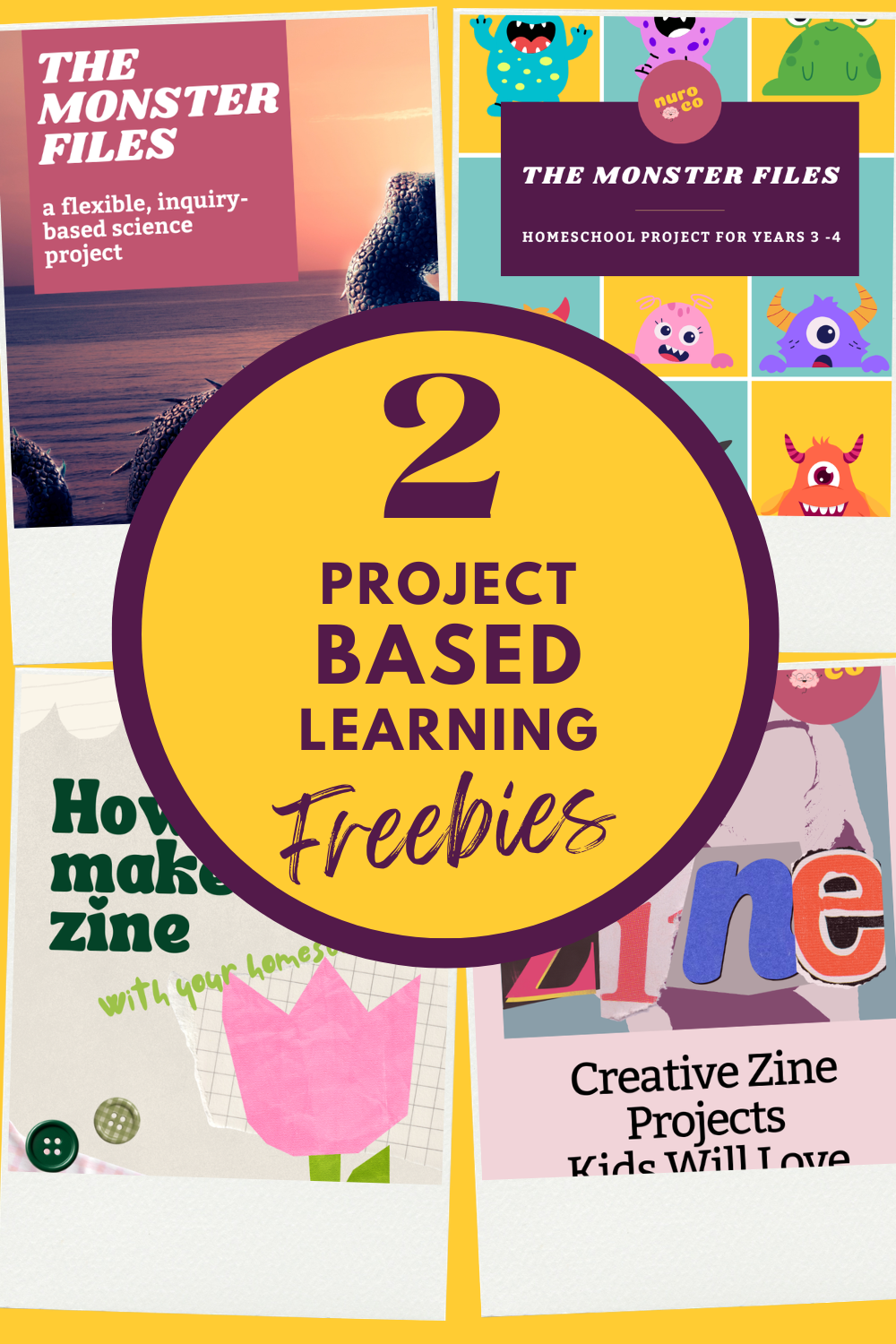
A mini project like Zine Zone can be a gentle entry point for Years 5–6 learners. It’s flexible, creative, and small enough to try without overcommitting.
From there, it’s often easier to see what might work next.
You can try Zine Zone here (for free).
If you’d like the year mapped out for you
If you like the idea of a project-based year but don’t want to piece everything together yourself, you can also use a full-year project bundle.
This brings together four longer projects of your choice, along with the guides and documentation support needed to help you feel confident about what you’re doing and how it fits.
Rather than starting from scratch, you’re working with something that’s already been designed to connect learning, evidence, and planning.
And if you need it, there’s also the option to talk things through — to ask questions, adjust your approach, or get a clearer sense of how it all fits together.
A different way to think about the year
You don’t need to map out every week in advance. You just need a starting point that feels manageable.
From there, things often begin to feel lighter, and more possible, than they did at the beginning.